AI Made Everyone an Image Maker, Not an Art Director
AI has democratised image production. It has not democratised visual judgment. In some cases, it may even widen the gap between people who have an eye and people who simply need an image.
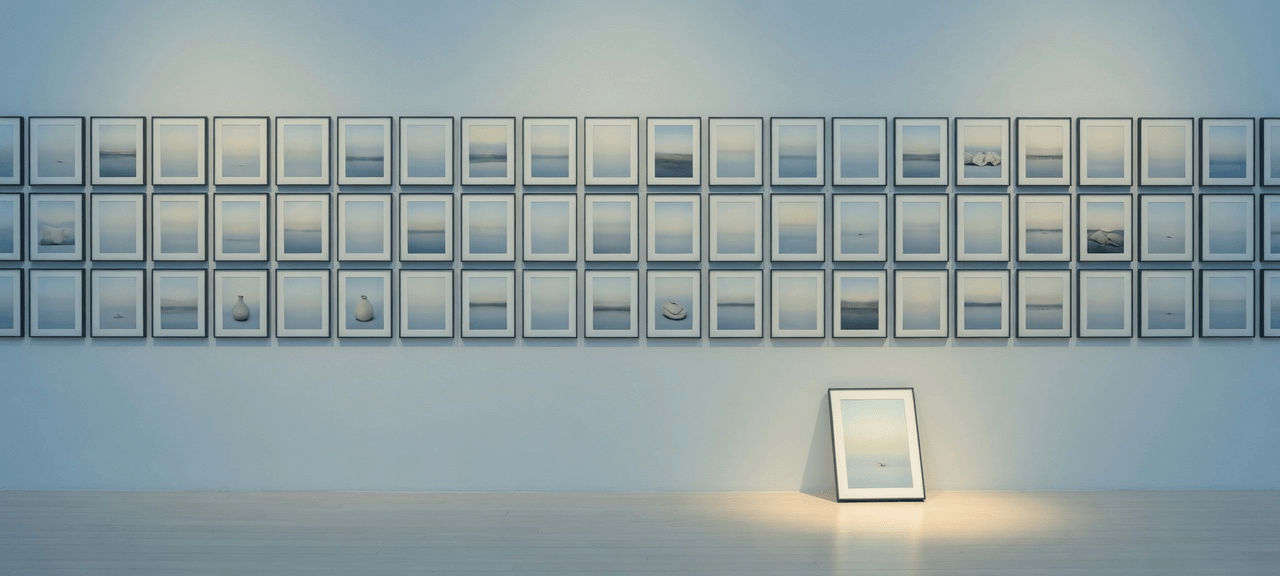
AI has democratised image production. It has not democratised visual judgment. In some cases, it may even widen the gap between people who have an eye and people who simply need an image.
Give a designer and a marketer access to the same image model and they do not suddenly become equally good at making images. They simply gain access to the same machine.
One of them may have years of visual references, an understanding of composition, typography, symbolism, visual history and the peculiar designer habit of rejecting something that is technically fine because it is somehow "not enough" "perfect".
The other may need something “futuristic” for a LinkedIn post before lunch. These are different starting points.
Production was never the whole skill
AI image models can now generate and edit highly controlled, polished visuals across a wide range of formats and styles. That removes a significant amount of manual friction.
It does not answer the more difficult questions:
- What should the image communicate?
- Which visual language belongs to the subject?
- What references are relevant?
- What relationship should exist between the image and the copy?
- What should be removed?
The ability to produce an image and the ability to direct one were never the same skill. AI makes that distinction more visible.
You cannot prompt what you cannot see
Visual culture changes the quality of a prompt long before the first word is typed. Someone with strong visual references can think in territories, not adjectives. They can connect a contemporary subject to a photographic movement, an editorial tradition, an industrial process, a period of graphic design or a specific symbolic language.
Someone without those references tends to describe the desired output literally: “Innovation”, “Premium”, “Futuristic”, “Human and technological”. The model has been waiting its entire life to answer this with a luminous glass orb.
Models have defaults
When the user does not impose a strong visual point of view, the model’s priors become the art director. The same patterns return: centred subjects, cinematic backlighting, polished surrealism, translucent gradients, impossibly clean spaces and metaphors that explain themselves before anyone has had time to feel anything.
The models will improve. Their range will expand. Their outputs will become harder to distinguish from professional work. But a model’s ability to render almost anything does not tell the user which thing deserves to exist.
Designers benefit from the same acceleration
Democratising access to a tool does not necessarily equalise outcomes. A designer receives the same speed advantage as everyone else, then adds:
- Visual culture,
- Intent,
- Context,
- Composition,
- Brand understanding,
- A high rejection threshold,
- The patience to generate thirty images and dislike twenty-nine of them.
The non-designer gains faster production. The designer gains faster production multiplied by existing judgment. The gap can remain. It can also grow.
A good image belongs to a system
Most generated images are evaluated as isolated objects: Does it look good? Is it impressive? Can I post it?
Professional visual work usually has a larger job. It must belong to a sequence, a brand, a campaign, an interface, a publication or a cultural context. It must create a relationship with the images around it.
A strong standalone image can still be the wrong image. This is where art direction survives. Perhaps more accurately, this is where it becomes impossible to ignore. The prompt box is democratic. The eye is still unevenly distributed.